A. A. A
Drag
Welcome to AAAPrintingServices
None

Silk screen, also known as screen printing, is a popular printing technique used to create images or designs on various surfaces, such as fabric, paper, plastic, glass, metal, and more. It is a versatile and cost-effective method of printing and is widely used in the production of clothing, posters, signage, promotional materials, and art prints.

The process involves creating a stencil, also known as a screen, which is usually made of a fine mesh material, traditionally silk, but nowadays more commonly polyester. The mesh is stretched over a frame, and areas of the screen are blocked off to create a negative of the desired image or design.

Here's a simplified overview of the silk screen printing process:

  1. Image preparation: The first step is to create the artwork or design that you want to print. This design is usually created digitally or drawn by hand and then transferred to a transparent film or emulsion-coated screen.
  2. Screen preparation: The screen is prepared by coating it with a light-sensitive emulsion. The transparent film with the design is placed on the emulsion-coated screen, and both are exposed to light. The light hardens the emulsion except in the areas that were blocked by the design on the film.
  3. Washing the screen: After exposure to light, the screen is washed with water, which removes the unhardened emulsion, leaving behind the open areas that correspond to the design.
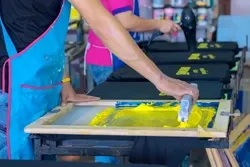
  4. Printing: The screen is then placed on the surface to be printed. Ink is placed on top of the screen, and a squeegee is used to push the ink through the open areas of the mesh onto the surface below. The ink passes through the screen only in the areas where the emulsion was removed during the exposure process, creating the desired image.
  5. Drying and curing: Once the printing is complete, the printed material is dried to set the ink. In some cases, additional curing might be required, especially for fabrics or certain types of inks.

Silk screen printing allows for precise and vibrant designs and is particularly well-suited for large-scale production runs. It can also accommodate a wide range of ink types, including water-based, plastisol, and specialty inks like metallic or glow-in-the-dark. However, it may require a different screen for each color used in the design, making the setup process more time-consuming for multi-color prints.

Overall, silk screen printing remains a popular and effective printing method, especially for projects that require high-quality, durable prints in bulk quantities.
Get a free Quotation